
Introduction
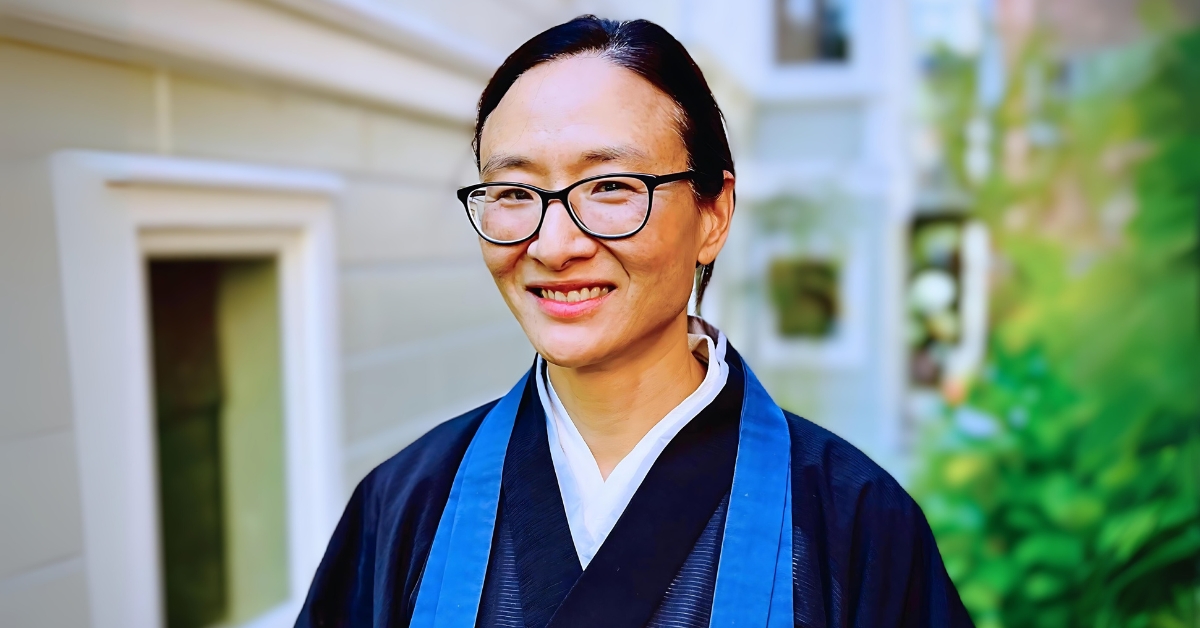
Kōgetsu Jenny Mok has served as SFZC’s Chief Financial Officer since July, 2024. She previously served as Treasurer for Green Gulch Farm and Tassajara and trained for the position with former CFO Michael McCord, now serving as SFZC’s President.
In her role, she works closely with temple and administrative leadership, as well as the Board, to steward SFZC’s financial health during a time of rising costs, post-COVID recovery, significant capital needs, and long-term organizational transition.
She often quotes Suzuki Roshi who reminded us that, “Money purifies our world. It is not something dirty; it is very pure. It is a very important thing for us to take care of and respect.” She sees financial stewardship as a form of practice rooted in honesty, care, steadiness, and support for the conditions that allow Zen training to continue for future generations.
First, tell us a little about yourself.
I came into residency for Zen training at SFZC in 2019. Before stepping into this role, I spent two decades working professionally in the tech world. I care deeply about the intersection of practice and modern life—how our values show up in real decisions, finances, relationships, and systems.
Serving as CFO feels very much like a form of practice to me: listening carefully, paying close attention to details, and helping the organization respond to changing conditions with steadiness rather than fear. A great deal of the work happens through budgets, spreadsheets, planning conversations, and thoughtful communication, but underneath all of that is an effort to care for the conditions that allow practice to continue.
What is the role of SFZC’s CFO? Didn’t we used to have a Treasurer?
Yes. For at least the past twenty years, SFZC has had this role, sometimes called Treasurer and sometimes CFO. Historically, it was often held by dedicated volunteers or senior Zen students who offered tremendous care and service to the organization. As SFZC has grown more complex, the role has gradually evolved into a centralized staff position. Today, SFZC is a multi-site organization with three physical temples, dozens of programs, significant infrastructure, and a diverse community of employees, residents, and guests.
The CFO helps oversee budgeting and forecasting, long-range planning, insurance, facilities and capital planning, investments and endowment coordination, donor-restricted funds, compliance, audits, and support for the Board and Finance Committee. In practice, it also means helping the organization respond calmly and thoughtfully when unexpected challenges arise.
I see the role as a form of stewardship practice: helping SFZC meet changing conditions with clarity, realism, and care.
SFZC has three Dharma centers as well as a growing online presence. What is the biggest financial challenge they face today?
The biggest challenge is simply covering the true cost of operating and caring for these practice centers over the long term.
SFZC is located in San Francisco, Marin, and Monterey—some of the most expensive counties in California—and operating costs have risen dramatically in recent years. Insurance, especially property, fire, and health insurance, has increased substantially. We have also seen rising costs in labor, food, utilities, maintenance, and regulatory compliance.
Like many organizations, we are also addressing the effects of deferred infrastructure work that accumulated over many years, particularly during periods when resources were limited. Much of this work is not visible day to day, but it involves essential systems and repairs needed to responsibly care for aging buildings and land.
There is sometimes a perception that because SFZC has beautiful temples and recently completed an $11 million capital campaign and renovation project at City Center, the organization must be financially flush. In reality, that project was largely infrastructure-driven, focused on accessibility, fire and code compliance, and aging plumbing and electrical systems. It was funded through restricted donations specifically for that purpose and does not change SFZC’s ongoing operating realities.
In FY2026, SFZC operated with an annual operating budget of approximately $7.6 million and finished the year with an operating deficit, supported in part through reserves, endowment support, and donor generosity. Our current fiscal year budget is approximately $8.7 million, reflecting rising costs across insurance, personnel, and facilities.
At the same time, we are actively working toward greater long-term sustainability. We have been refining programming and pricing models, strengthening fundraising and donor cultivation, expanding participation, and benefiting from partnerships such as Greens Restaurant and Enso Village, which provides ongoing operational support connected to its monthly service revenues. We are encouraged by the progress we are seeing and continue working toward more balanced, sustainable budgets over time.
What about other challenges?
COVID impacted SFZC deeply, and we are still recovering from its effects, particularly at Tassajara, which was closed to guests for extended periods and is now also navigating the aftermath of the recent zendo fire.
At the same time, Tassajara has intentionally been evolving away from a more traditional guest-season model toward Sangha Weeks, a more practice-centered approach that invites people into deeper participation in monastic life. While this shift is more aligned with practice values, it also changes the financial structure that historically helped support SFZC.
Looking ahead, SFZC is facing several million dollars in capital projects across our campuses over the coming years, separate from the uncertainty surrounding the future rebuilding of the Tassajara zendo. These are significant responsibilities, but they are part of caring for places that have supported practice continuously for decades.
Is any of this particular to the Bay Area? California?
Very much so. California, and especially the Bay Area, is an expensive and highly regulated place to operate. Fire risk, insurance markets, labor costs, environmental requirements, and infrastructure needs all add layers of complexity and expense.
Many Dharma centers across the country are facing similar pressures, but the scale here is amplified by geography and by the realities of maintaining historic practice places in California.
What is SFZC doing to address these challenges?
We are approaching these challenges thoughtfully and from many directions at once.
This includes refining programs and pricing to better reflect actual costs while maintaining accessibility, strengthening programming and participation, cultivating donor relationships more intentionally, improving long-range financial planning, and continuing to evaluate how to operate sustainably without losing sight of our practice values.
We are also working carefully to reduce unnecessary expenses where possible while still investing responsibly in staff, infrastructure, and the long-term health of the organization.
What is working well for SFZC right now?
One thing that gives me confidence is the depth of commitment and care people continue to show for SFZC.
We have extraordinarily dedicated practitioners, staff, residents, employees, volunteers, teachers, and donors. SFZC has been sustained over many decades by talented Zen students and deeply committed people who have offered immense wisdom, labor, and generosity to these practice places.
I also feel encouraged that we are becoming more transparent and realistic about finances while continuing to adapt creatively. We are seeing positive momentum through programming changes, stronger planning, community support, and partnerships that help strengthen our long-term sustainability.
Most importantly, the practice itself continues to deeply help people.
How is the Online Center doing?
SFZC Online has been one of the most encouraging developments for SFZC in recent years. It allows us to reach people who may never be able to come onsite and creates new ways for practice to be accessible.
Financially, it continues to grow and evolve, but more importantly, it has become a meaningful extension of our mission and community.
What can people do to support SFZC?
There are many ways people can support SFZC.
Participating in programs, becoming a member, practicing with the sangha, volunteering, becoming a regular donor, contributing to fundraising efforts, and helping share the story of SFZC with others all make a real difference.
I genuinely believe these places matter. They give people an opportunity to slow down, encounter themselves honestly, learn how to be with suffering, and cultivate a more compassionate and ethical way of living. In a time when the world feels increasingly fractured and overwhelmed, spaces devoted to silence, practice, and awakening feel more important than ever.
Financial stewardship cannot come entirely from fear or scarcity. We have to be honest about the challenges, but we also have to remember that these places exist because generations of people have loved and supported them.
I feel an enormous sense of gratitude for everyone who continues to help sustain SFZC and the Dharma for future generations.
Thank you, Kogetsu, for your thoughtful answers and taking such good care of SFZC!