
3/31/2026 Update: The most important next step is for the inspectors to arrive to determine the cause of the fire (still unknown) and how safe the ruins are for clearing. Once we have that information, we can assess what’s possible for Work Period and the Summer Guest Season/Summer Practice Program. The inspectors are scheduled to arrive today.
The sangha continues to maintain the morning and evening zazen and service schedule in the large room of the retreat hall. Over the first couple of days after the fire, the residents gathered for a sharing circle and later a fire debriefing to offer their experiences and feedback from the heart. They are being supported by SFZC leadership through sessions with trauma therapists, some of whom work with firefighters. Tassajara leadership has also created a “buddy system” where two practitioners check in with each other. If residents feel overextended or unwell, they can take whatever time off that they need.
During the final few days of the practice period, the sangha will participate in the traditional Dharma inquiry ceremony for the head monk, the closing of the practice period, and the departing monk ceremonies.
We will update this post as more information becomes available.
___________________________________
On Thursday, March 26, during the last sesshin of the winter 2026 practice period, a fire destroyed our beloved zendo at Tassajara. Fortunately, no one was injured, even as the blaze raged for several hours. Although the cause is still unknown, the result is known: charred wood, scorched metal, grey ash, and open space are all that remain of the structure, which had stood since 1978.
Once residents noticed the fire around 11:50 pm, they notified Abbot David Zimmerman, who is leading the ango. Fortunately, Abbot David was one of the five fire monks who saved the monastery in 2008 from the Basin Complex Fire.
“As someone who’s had experience with fire at Tassajara before, it’s been beneficial to have me here to support the sangha with both meeting the fire and handling the post-fire impacts and realities,” he said.
Many of the 32 residents battled the blaze with an old-fashioned fire brigade, using buckets to carry water from the creek and numerous irrigation spigots to quell the flames. The fire was mostly contained when volunteer firefighters from the nearby hamlet of Cachagua arrived at 12:30 am. They stayed on site until 6:30 am and no evacuations were necessary. Steve Scarlett, a local friend of ZMC and retired firefighter, was also on hand to help with the efforts
In a Facebook post on Friday morning, the Cachagua Fire Department wrote: “The staff at the Tassajara Mountain Zen Center should be incredibly proud; their initial fire attack efforts helped keep the fire contained, buying critical time for responding apparatus to arrive and preventing further damage. Thanks to their quick actions, only one structure was lost.”
Abbot David said the Fire Department recommended monitoring the ruins for 24 hours to ensure no hidden embers reignite. However, the residents kept an hourly vigil for two days over the charred wood, scorched metal, and gray ash. There were no flare-ups.
Most of the buildings at Tassajara have been without electricity since the fire; fortunately, there’s still power in the Stone Office and the kitchen, so there is refrigeration and residents are able to cook meals. However, internet access is limited, and the bathhouse has hot water only for a few hours a day.
In addition to the zendo, the fire also razed the public bathrooms and the first aid shed at the bottom of the east stairs that run parallel to Carbaga Creek. The outer wall of the library facing the back of the zendo was scorched, but the library interior was unscathed.
Fortunately, a number of precious ceremonial instruments that were given to Tassajara when it opened by the Shumucho Soto Zen Headquarters in Japan also went unscathed: the mokugyo and the wide, heavy brass bell had already been moved into the library. (Traditionally, during sesshin, only the small bell is used during liturgical services and oryoki meals to minimize sensory distractions.) The taiko drum and the densho on the wooden walkway, both Shumucho gifts brought over by Kobun Chino Roshi, were also saved from the flames, as was the central wooden altar.
However, the altar’s centerpiece—the 2,000-year-old stone Buddha statue—cracked and crumbled against the outer library wall, where it had been placed for safekeeping. Miraculously, the head is still intact. This is the second time this museum-quality Gandharan (500-700 C.E.) Buddha has been damaged in a fire. During the 1978 zendo fire, it broke into pieces and was painstakingly and beautifully restored by the Asian Art Museum in San Francisco. See pages 30-31 of the Summer 1983 Wind Bell for full restoration details.
During the 2008 Basin Complex fire, the late Myogen Steve Stucky, SFZC Abbot from 2007 until his death in 2013, buried the statue in the bocce court, where it safely rested for a week while the fire monks battled the encroaching wildfire.
This is also the second time that a Tassajara zendo has burned. In April 1978, the original zendo that was located in the current student eating area burned down. According to the Winter 1978-79 Wind Bell, the new zendo was erected in the Upper Garden during work period. It was supposed to be “temporary,” and while it became more permanent than initially intended, its recent destruction reminds us that everything is transient.
“Tassajara practice continues uninterrupted,” Abbot David said. “The sangha is resilient. Canyon wrens sing on the kaisando roof in the morning, and frogs chant along Cabarga Creek at night. Gratitude to the Buddhas and Ancestors, the mountains and waters, for this liberative Way of life.”
Zendo Fire Donations: giving.sfzc.org/zendo-fire
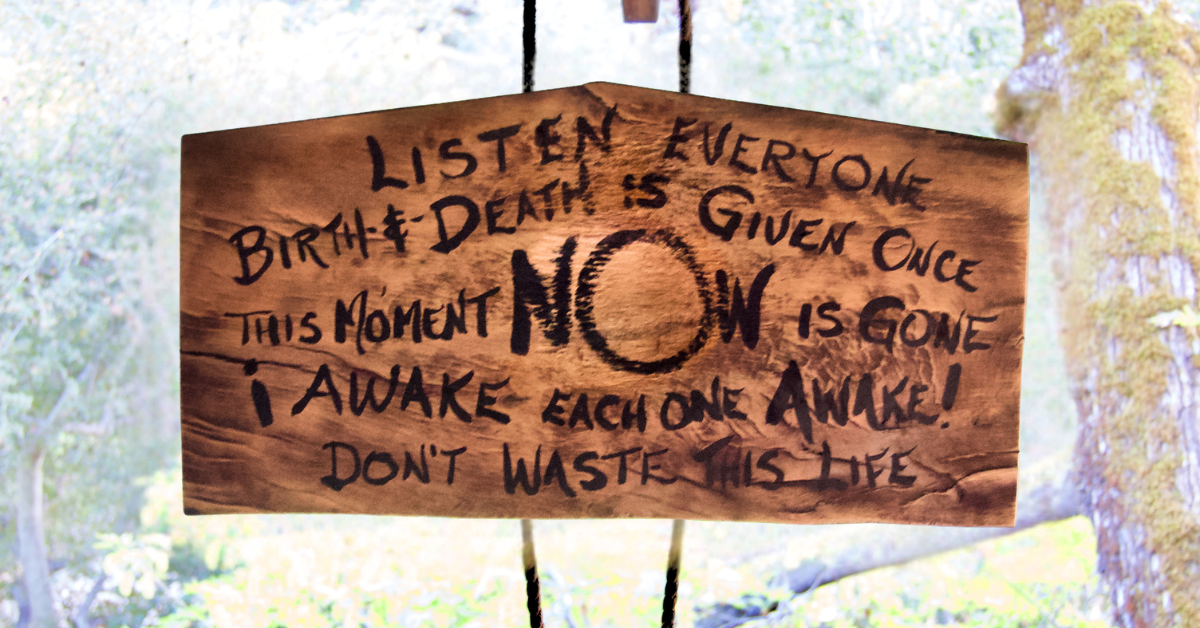
Image is of the Tassajara zendo han when it was first hung. Calligraphy by then Abbot Myogen Steve Stücky. Photo by Renshin Bunce.